
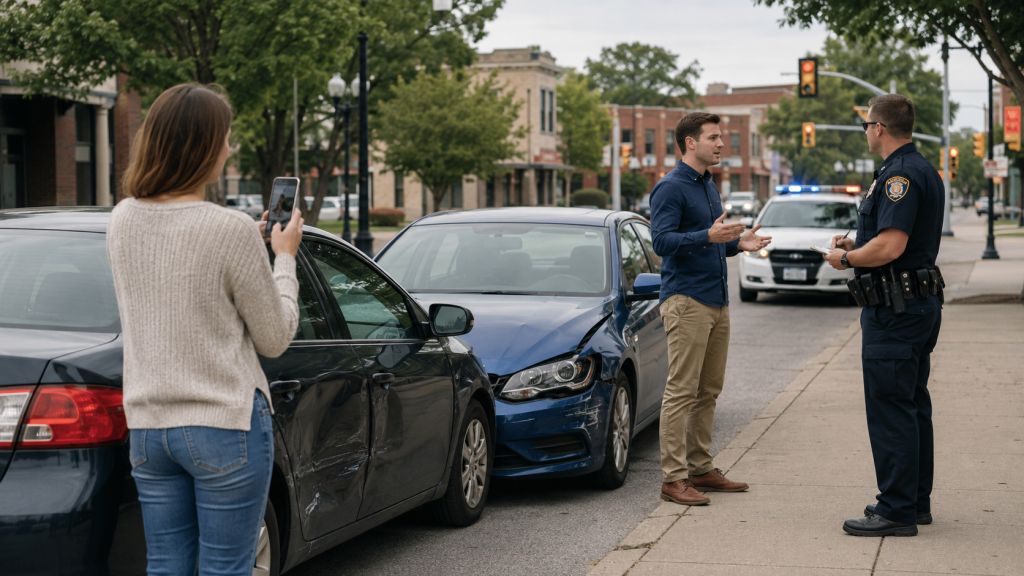
Quick Answer: Move to a safe location, check for injuries, call 911 if needed, exchange information, photograph the scene, and get medical care. Report the crash to your insurer, but avoid admitting fault, giving a recorded statement to the other driver’s insurer, or accepting a settlement before you understand your injuries and legal options.
Whether the crash happened on McGalliard Road, Tillotson Avenue, Madison Street, near Ball State University, or elsewhere in Delaware County, what you do afterward affects your safety, health, and ability to recover compensation.
Key Takeaways
- Stop and move out of traffic if it’s safe to do so.
- Call 911 if anyone may be injured, traffic is blocked, or damage is serious.
- Exchange information without arguing about fault.
- Photograph vehicles, the road, signals, and surroundings.
- Get medical care promptly, even if symptoms seem minor.
- Be careful what you say to an insurance adjuster.
- Don’t accept a settlement until you understand the accident’s full impact.
1. Stop and Move to a Safe Location
Never leave the scene, even if damage looks minor. If your vehicle can be moved safely, pull onto the shoulder or into a nearby lot, turn on your hazard lights, and watch for traffic before getting out. If it can’t be moved, stay in a safe place and wait for help.
2. Check for Injuries
Check yourself and your passengers before looking at the vehicles. Call 911 immediately if anyone is bleeding, unconscious, confused, struggling to breathe, in severe pain, or unable to move safely. Don’t move a seriously injured person unless staying put would be more dangerous.
Adrenaline can mask pain — neck stiffness, back pain, headaches, dizziness, or numbness may not show up until later. When in doubt, get medical help.
3. Call the Police When Needed
Call the police if:
- Someone is injured or may be injured
- Traffic is blocked or vehicles can’t be moved
- Damage appears significant
- The other driver leaves or refuses to share information
- You suspect impairment
- The drivers disagree about what happened
- You feel unsafe
Depending on location, the Muncie Police Department, Delaware County Sheriff’s Office, or Indiana State Police may respond. An officer’s crash report can matter later when insurers investigate. Don’t let another driver talk you into keeping things “off the record” if anyone is hurt.
4. Exchange Information Without Admitting Fault
Get the other driver’s:
- Name and contact information
- Driver’s license details
- License plate number
- Vehicle make, model, and color
- Insurance company and policy number
- Vehicle owner’s name, if different from the driver
Photographing their license, insurance card, plate, and vehicle is often faster than writing it all down. Keep things factual — don’t argue, accuse, or apologize in a way that could be read as accepting fault. You may not yet know what actually caused the crash.
5. Photograph and Record the Scene
Before vehicles are moved, if it’s safe, photograph:
- Damage to every vehicle and their positions
- License plates
- Skid marks and debris
- Traffic signals, signs, and lane markings
- Road and weather conditions
- Nearby businesses or security cameras
- Street names and visible injuries
Take both close-up and wide shots. Don’t count on police or the other driver to document this for you.
6. Get Witness Contact Information
Ask anyone who saw the crash for their name and phone number. You don’t need a full statement — just their willingness to be contacted later. A neutral witness can matter if the drivers or insurers disagree on what happened.
7. Be Careful What You Say
Shock can make people say “I’m fine,” “I’m sorry,” or “I never saw them” — statements that can later be taken out of context. Tell police what you observed, but don’t guess at speeds or details you’re unsure of; it’s fine to say you don’t know.
Avoid posting about the crash on social media. Insurers sometimes review public posts to challenge your account or downplay your injuries.
8. Seek Medical Care Promptly
Get checked out even if you feel okay. Whiplash, concussions, and soft-tissue injuries don’t always cause immediate symptoms. Seek care if you develop:
- Headaches, dizziness, or confusion
- Neck, back, chest, or abdominal pain
- Numbness or tingling
- Trouble sleeping or moving normally
- Soreness that worsens over time
Tell the provider your symptoms started after the accident, follow through on treatment, and keep every bill and record. Delaying care can hurt both your health and your claim — insurers may question injuries diagnosed later.
9. Report the Accident to Your Insurance Company
Notify your insurer within your policy’s required timeframe. Share basic facts: when and where the crash happened, which vehicles were involved, whether police responded, whether anyone reported an injury, and where your vehicle was taken. Don’t guess about fault, speed, or injury severity — that takes time to determine.
Be cautious if the other driver’s insurer asks for a recorded statement; their adjuster is investigating in the company’s interest, not yours. Consider talking to an attorney before giving one.
10. Keep All Accident-Related Records
Save everything in one folder: the police report, photos, medical records and bills, receipts, repair estimates, insurance correspondence, witness information, and proof of missed work. A brief daily log of pain and limitations can also help show impact beyond vehicle damage.
11. Understand Indiana’s Fault and Filing Rules
Indiana uses modified comparative fault: your compensation can be reduced by your percentage of responsibility, and you generally can’t recover anything if you’re found more than 50% at fault.
Most Indiana personal injury lawsuits must be filed within two years, though claims involving a government vehicle, employee, minor, or other unusual circumstances may have different deadlines. Don’t assume you have plenty of time — evidence and witnesses grow harder to find, and some claims require early notice.
12. Don’t Rush to Accept a Settlement
An early offer may look appealing when bills are piling up, but it often doesn’t account for future treatment, ongoing pain, lost earning capacity, or permanent injury. Accepting usually means signing a release that ends your claim for good, even if your condition worsens later. Understand what you’re giving up before agreeing.
When Should You Contact a Muncie Car Accident Attorney?
Consider talking to an attorney if:
- You or a passenger was injured
- Fault is disputed
- The insurer is delaying or denying your claim
- You’re being asked for a recorded statement
- The settlement offer seems too low
- You missed work because of the accident
- Injuries may require ongoing treatment
- The other driver was uninsured or underinsured
- A commercial or government vehicle was involved
- You’re being blamed for part or all of the crash
You don’t need to wait for a denial to get guidance — early legal advice can help you preserve evidence and avoid statements that weaken your position.
Speak Directly With a Personal Injury Attorney
Many firms route callers through intake departments before they ever speak to an attorney. Dennis, Wenger & Abrell, P.C. takes a more direct approach: our attorneys speak with you personally, explain the insurance process, and help you understand next steps. We can also help collect evidence, communicate with insurers, document losses, and pursue compensation, which may include medical expenses, lost income, pain and suffering, property damage, and future treatment needs.
Dennis, Wenger & Abrell, P.C. has served individuals, families, and businesses throughout Central Indiana for decades, with guidance grounded in local knowledge of Muncie, Delaware County, and Indiana law.
Frequently Asked Questions
Call when someone is injured, traffic is blocked, damage is significant, a driver leaves, the drivers disagree, or you feel unsafe. A crash report can help document the accident for insurers.
No, Indiana follows a traditional fault-based system, meaning the person responsible for the accident is financially liable for the resulting damages, including medical bills, lost wages, and property damage.
Possibly. Indiana’s comparative fault rules allow recovery if your share of fault doesn’t exceed 50%, though your compensation is reduced by that percentage.
You can share identifying information, but be cautious about recorded statements, discussing fault, signing documents, or accepting a settlement before you understand your injuries and rights.
Talk to a Muncie Car Accident Attorney
If you were injured in a Muncie car accident, you don’t have to manage the insurance process alone. Before giving a recorded statement, signing a release, or accepting a settlement, talk to a local attorney about how those decisions could affect your claim. Contact Dennis, Wenger & Abrell, P.C. to discuss your options.
This article is provided for general informational purposes and is not legal advice. Reading it does not create an attorney-client relationship. Consult a qualified Indiana attorney about your specific circumstances.