
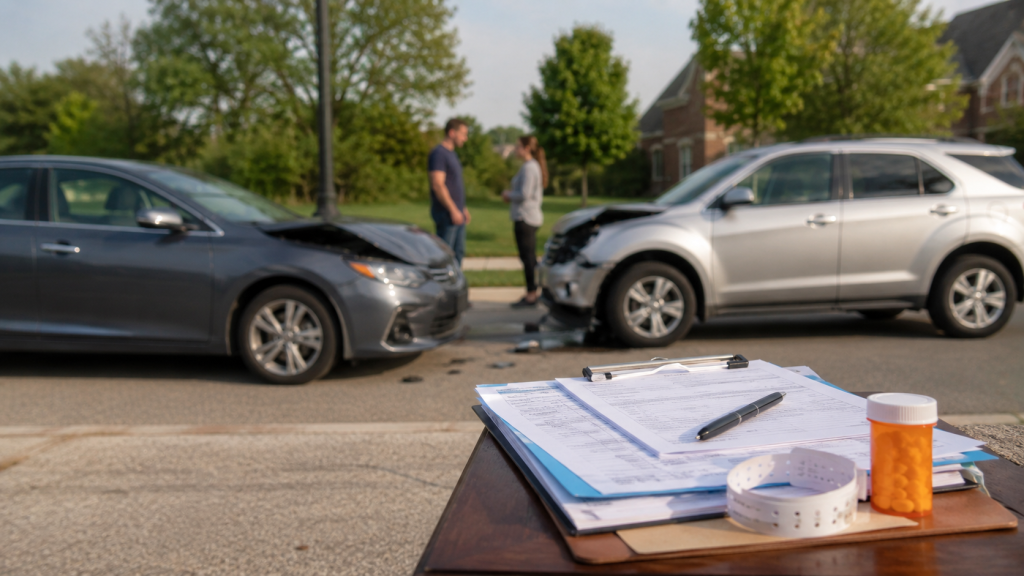
Quick Answer: After a Carmel car accident, medical bills may initially be paid through health insurance or available medical payments coverage on an auto policy. The at-fault driver’s liability insurer may ultimately compensate you for accident-related medical expenses, but it usually does not pay each bill as treatment occurs. Those expenses are often addressed later through a settlement or judgment.
Will the At-Fault Driver’s Insurance Pay Medical Bills Immediately?
Many injured people expect the other driver’s insurance company to pay hospital, doctor, therapy, and prescription bills as soon as they arrive. In most cases, the liability insurer first investigates who caused the crash, whether the treatment was related to the accident, and how much coverage is available.
The insurer may also dispute whether certain treatment was necessary or whether the injured person shared responsibility for the collision. Because of that investigation, bodily injury liability coverage is usually used to resolve the claim as a whole rather than paying each medical provider during treatment.
While the claim is pending, the injured person may need to rely on health insurance, medical payments coverage, or another payment arrangement.
Should You Use Health Insurance After a Car Accident?
Health insurance can often be used for accident-related treatment. This may include private insurance, Medicare, Medicaid, or an employer-sponsored health plan.
Using health insurance does not prevent you from pursuing a claim against the driver who caused the crash. It can help keep bills from remaining unpaid while the liability claim is being investigated.
You may still owe deductibles, copayments, coinsurance, or charges for noncovered care. Keep the bills, explanations of benefits, receipts, and denial notices so you can document what was charged, what insurance paid, and what remains outstanding.
How Medical Payments Coverage Can Help
Medical payments coverage, often called MedPay, is optional auto insurance that can pay qualifying medical expenses up to the policy limit. It may apply regardless of who caused the accident, depending on the policy.
MedPay can sometimes help with ambulance charges, emergency treatment, diagnostic testing, doctor visits, and other covered care while the liability claim remains unresolved.
Check the declarations page of the applicable auto policy to determine whether MedPay is included, how much coverage is available, and what documentation the insurer requires. Coverage terms and limits vary, so do not assume every policy includes it.
Who May Seek Repayment From a Settlement?
When health insurance or another benefit plan pays accident-related medical bills, it may later seek repayment from the settlement or judgment. This is commonly called reimbursement or subrogation.
Hospitals and other medical providers may also claim a right to payment from the recovery in certain circumstances. These claims are often referred to as medical liens.
The validity and amount of any reimbursement claim or lien should be reviewed rather than assumed. Different rules may apply to private health insurance, self-funded employer plans, Medicare, Medicaid, and individual medical providers.
Keep all letters concerning reimbursement, subrogation, liens, collections, or unpaid balances. These obligations can affect how much money remains after the claim is resolved.
What If You Do Not Have Health Insurance or MedPay?
A lack of health insurance or MedPay does not automatically prevent you from receiving treatment or pursuing a personal injury claim.
Some providers offer payment plans or other billing arrangements. In some cases, a provider may agree to wait for payment while the claim is pending, although the patient may remain responsible if the claim is unsuccessful or the recovery is insufficient.
Ask for an itemized bill and written terms before signing a payment agreement, assignment, or authorization connected to the personal injury claim.
Keep Complete Medical and Payment Records
Organized records help show the financial effect of the accident.
Keep medical bills, explanations of benefits, copayment receipts, prescription costs, therapy records, medical equipment expenses, and transportation costs related to treatment. Also preserve work restrictions, employer letters, pay records, and proof of missed income.
Review the records for duplicate balances, missing providers, incorrect insurance information, and bills that have not been processed. The goal is to identify the total amount charged, the amount paid by insurance, the amount adjusted, and the balance still owed.
Be Careful Before Accepting a Settlement
Before accepting a settlement, make sure you understand your current medical expenses, expected treatment, outstanding balances, reimbursement claims, and available insurance coverage.
An early offer may not account for additional appointments, therapy, future treatment, or bills that have not yet arrived. It may also fail to consider lost income and other accident-related losses.
Accepting a settlement generally requires signing a release that ends the claim. If treatment continues or additional expenses appear after the release is signed, you may be unable to seek more compensation from the other driver or insurer.
How a Carmel Car Accident Attorney Can Help
A car accident attorney can review the available insurance policies, organize medical expenses, identify reimbursement claims or liens, and communicate with insurers and medical providers.
The attorney can also evaluate whether a settlement reasonably accounts for documented medical bills, expected care, lost income, and other losses. This can be especially important when the insurer disputes fault, questions treatment, or offers a settlement before the person’s medical condition is fully understood.
Anthony “Tony” Oliveira of Dennis, Wenger & Abrell, P.C. handles personal injury matters, including motor vehicle accident claims. He is admitted to practice in Indiana and before the U.S. District Courts for the Northern and Southern Districts of Indiana.
Frequently Asked Questions
Usually not. The liability insurer generally investigates the accident and resolves medical expenses later as part of a settlement or judgment.
Health insurance can often be used while the injury claim is pending. Keep records of deductibles, copayments, balances, and amounts paid by the plan.
MedPay is optional auto insurance that can pay qualifying medical expenses up to the policy limit, often regardless of fault. Availability and coverage depend on the policy.
Possibly. A health insurer or benefit plan may assert reimbursement or subrogation rights against the recovery.
The result depends on policy limits, other available coverage, medical balances, and the facts of the claim. Any settlement should be reviewed in light of outstanding bills and repayment obligations.
Contact a Carmel Car Accident Attorney
Medical bills can become difficult to manage while an insurance claim is still pending. Before accepting a settlement that may not cover your treatment and related obligations, contact Dennis, Wenger & Abrell, P.C. to discuss the collision, available insurance, and outstanding medical expenses.
Legal Disclaimer
This article is for general informational purposes only and is not legal advice. Reading it does not create an attorney-client relationship with Dennis, Wenger & Abrell, P.C. Insurance coverage, reimbursement rights, liens, and legal deadlines depend on the facts and policy terms involved. Speak with a qualified Indiana attorney about your situation.