
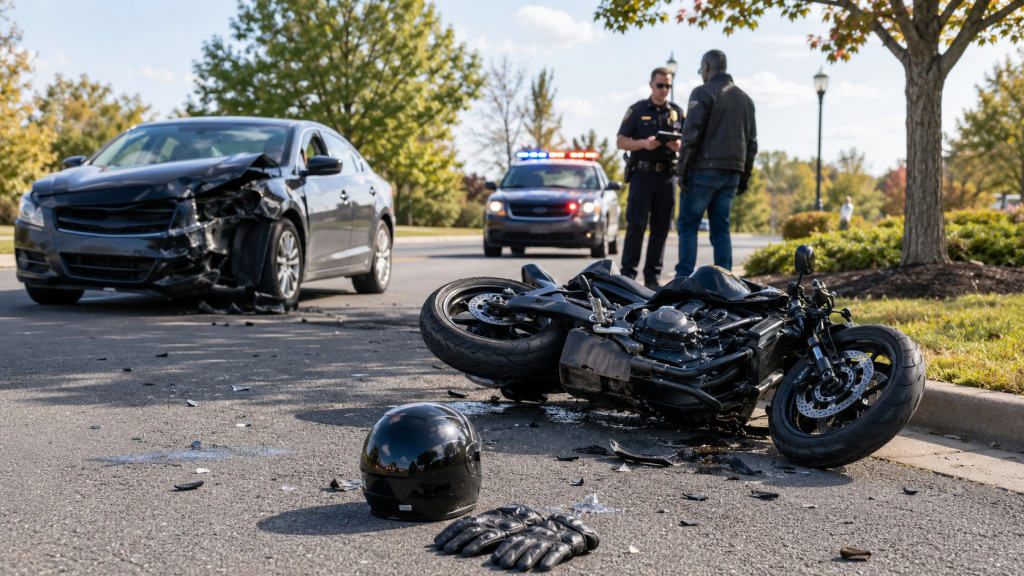
Quick Answer: After a motorcycle accident in Carmel, get to safety if possible, call 911, seek medical care, photograph the scene, collect witness information, and preserve your motorcycle, helmet, and riding gear. Notify your insurer promptly and avoid accepting blame or settling the claim before you understand your injuries and available evidence.
What Should You Do First After a Motorcycle Accident?
The first priority after a crash is safety and medical care. If you can move without putting yourself at greater risk, get out of active traffic and call 911. Avoid moving someone with a suspected head, neck, or back injury unless remaining in place creates an immediate danger.
If you are physically able, take these steps:
- Call 911 and report the crash.
- Seek medical attention for injuries or concerning symptoms.
- Photograph the motorcycle, other vehicles, roadway, and visible injuries.
- Exchange information with the other driver.
- Get names and contact information from witnesses.
- Preserve your motorcycle, helmet, and riding gear.
- Notify your insurer promptly.
Do not assume you are uninjured simply because you can stand or walk after the collision. Tell medical providers that you were involved in a motorcycle crash and describe the symptoms you are experiencing.
What Evidence Should You Collect at the Crash Scene?
Motorcycle crashes often lead to disagreements about speed, lane position, turning movements, visibility, and who had the right of way. Photographs and independent witnesses can provide important evidence when the rider and driver give different accounts of what happened.
For riders injured in Carmel, preserving scene evidence can be especially important when a crash involves a disputed turn, lane change, or right-of-way issue. Photograph the motorcycle and other vehicles from several angles, along with skid marks, debris, traffic signals, lane markings, signs, road conditions, and the surrounding roadway.
Get contact information from anyone who saw the collision. Also identify nearby businesses, homes, dashcams, or other possible sources of video because recordings may be overwritten before an insurance dispute develops.
Should You Keep Your Helmet, Riding Gear, and Damaged Motorcycle?
Yes. Do not throw away, repair, or alter your helmet, jacket, gloves, boots, or other damaged protective equipment before it has been documented. Scrapes, impact marks, tears, paint transfer, and other damage may help show how the collision occurred or where the rider made contact.
The motorcycle itself may also contain useful evidence. Photograph it before repairs and keep towing records, storage documents, repair estimates, and insurance inspection reports. In a serious or disputed crash, consider whether the motorcycle should be inspected before it is repaired, sold, or salvaged.
Indiana generally requires motorcycle riders under age 18 to wear a helmet and protective eyewear. Riders operating with a motorcycle learner’s permit must also wear a DOT-approved helmet.
How Can Indiana Comparative Fault Affect a Motorcycle Claim?
Indiana follows a modified comparative-fault system. A rider’s compensation can be reduced by the percentage of fault assigned to the rider, and a claimant who is more than 50% at fault generally cannot recover from the other responsible party.
That matters because an insurer may argue that the motorcyclist was speeding, following too closely, positioned improperly in the lane, failed to maintain a proper lookout, or otherwise contributed to the collision. Those allegations should be evaluated against the actual evidence rather than assumed to be true.
Police documentation, photographs, witness accounts, video, vehicle damage, and the condition of the motorcycle can help establish how the crash occurred. Avoid admitting fault at the scene or guessing about speeds, distances, or events you did not clearly observe.
What Should You Tell the Insurance Company?
Notify your motorcycle insurer promptly and provide complete, accurate basic information about the accident. Keep records of your communications, including who you spoke with, when the conversation occurred, and what information was requested.
Ask what coverage may apply to injuries, motorcycle damage, towing expenses, and uninsured or underinsured motorists. Review requests for recorded statements, broad medical authorizations, releases, and other documents carefully before responding.
Be particularly cautious about detailed statements to the other driver’s insurance company. Do not speculate about fault or minimize injuries that are still being evaluated.
When Should You Be Careful About Settling a Motorcycle Claim?
Do not evaluate a settlement based only on the medical bills or motorcycle damage you know about immediately after the crash. Keep records of medical treatment, prescriptions, rehabilitation, missed work, towing, motorcycle repairs, and insurance communications so you have a clearer picture of the losses involved.
An insurance company may make an offer before treatment is finished or the long-term effect of an injury is known. A settlement usually involves signing a release that ends the claim, so understand what losses are being resolved and whether additional treatment, lost income, or other expenses are reasonably expected before accepting an offer.
Anthony “Tony” Oliveira of Dennis, Wenger & Abrell, P.C. handles personal injury matters involving motorcycle accidents in Indiana.
Frequently Asked Questions About Motorcycle Accidents in Indiana
Indiana generally requires motorcycle riders under age 18 to wear a helmet and protective eyewear. Riders operating with a motorcycle learner’s permit must also wear a DOT-approved helmet while riding.
Keep the helmet and photograph any scratches, cracks, impact marks, or other damage. Do not repair, discard, or alter it before the accident and injuries have been evaluated because its condition may become relevant evidence.
You may need to provide basic information, but be cautious about detailed recorded statements, discussions of fault, broad medical authorizations, or settlement documents. Avoid guessing about facts or minimizing injuries that are still being evaluated.
Possibly. Under Indiana comparative-fault rules, compensation can be reduced by the percentage of fault assigned to an injured claimant, while a claimant who is more than 50% responsible generally cannot recover from the other responsible party.
Document the motorcycle thoroughly before repairs and keep repair estimates, towing records, and inspection documents. When fault or the cause of a serious crash is disputed, consider whether the motorcycle should be inspected before repairs, sale, or salvage changes its condition.
Contact Dennis, Wenger & Abrell, P.C.
Motorcycle crashes in Carmel can involve disputed fault, serious injuries, and evidence that may disappear quickly. Before accepting a settlement, contact Dennis, Wenger & Abrell, P.C. to discuss the accident, available insurance coverage, and the evidence that may be important to your claim.
Legal Disclaimer
This article is for general informational purposes only and is not legal advice. Reading it does not create an attorney-client relationship with Dennis, Wenger & Abrell, P.C. Motorcycle accident claims depend on the specific facts, available evidence, insurance coverage, and applicable law. Speak with a qualified Indiana attorney about your situation.