
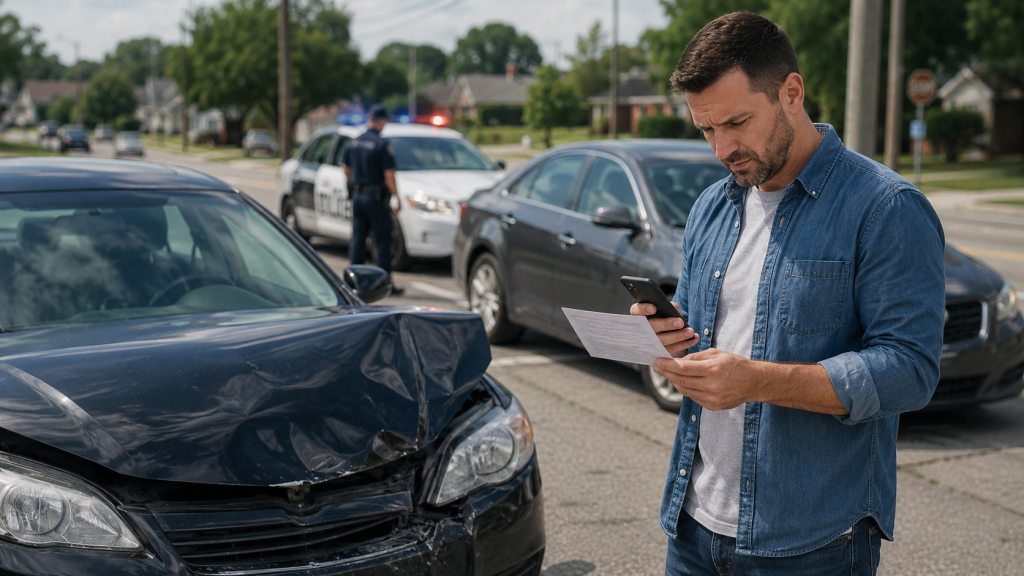
Quick Answer: If an uninsured driver causes an accident in Indiana, you may be able to seek compensation through uninsured motorist coverage under your own auto policy or another policy that covers you or the vehicle. Report the crash promptly, preserve evidence, notify the insurer, and review the applicable coverage before giving a detailed statement or accepting a settlement.
How Uninsured and Underinsured Motorist Coverage Works
Uninsured motorist coverage, commonly called UM coverage, can protect an insured person when the driver responsible for a crash has no applicable liability insurance. Newly issued Indiana auto liability policies generally must include uninsured and underinsured motorist coverage unless the policyholder rejects the coverage in writing.
Underinsured motorist coverage, or UIM coverage, may apply when the responsible driver has insurance, but the available liability limits are not enough to cover the injured person’s proven losses.
A UM or UIM claim is usually filed with the injured person’s insurer or another policy covering the person or vehicle. The insurer may still investigate fault, coverage, injuries, and the value of the claim.
If the insurer says UM or UIM coverage was rejected, request the declarations page, complete policy documents, and written rejection form supporting that position.
Report the Crash and Notify the Insurer
Call the police if the other driver cannot provide valid insurance information, leaves the scene, refuses to cooperate, or provides information that appears false. A police report can document the drivers, vehicles, location, witnesses, visible damage, and statements made at the scene. It can also help establish that the responsible driver was uninsured or could not be identified.
Notify your insurer promptly because the policy may impose deadlines or additional duties after an uninsured or hit-and-run accident. Provide accurate basic information, but do not guess about speed, fault, injuries, or available coverage. Ask the insurer to confirm which coverages may apply and what documents or statements it requires.
What Happens After a Hit-and-Run?
A hit-and-run may lead to an uninsured motorist claim when the responsible driver cannot be identified or located. Coverage depends on the policy and whether the claim involves bodily injury, vehicle damage, or both.
Report the collision to law enforcement immediately and record every detail you remember, including the vehicle’s color, make, model, partial license plate, direction of travel, and visible damage.
Preserve photographs, dashcam footage, witness information, paint transfer, debris, repair records, and nearby surveillance video. This evidence can help show that another vehicle caused the crash. Bodily injury and property damage coverage may follow different rules, so do not assume every hit-and-run loss will be handled the same way.
Preserve Evidence Before It Disappears
An uninsured motorist claim still requires evidence showing who caused the crash, what injuries resulted, and the value of the losses.
Photograph the vehicles, roadway, traffic controls, skid marks, debris, and visible injuries. Save the police report number, witness details, medical records, towing bills, repair estimates, wage records, and correspondence with each insurer.
Act quickly if nearby homes, businesses, traffic systems, or vehicles may have recorded the accident. Video can be erased or overwritten.
Keep notes of every conversation with the insurance company, including the date, representative’s name, and what was discussed. Written records can help if the insurer later disputes notice, coverage, or information provided during the claim.
Can You File a Claim Through Your Own Insurance?
Yes. UM and UIM claims are commonly filed through the injured person’s own insurer, but payment is not automatic.
The insurer may dispute who caused the crash, whether the collision caused the medical treatment, the amount of lost income, the value of the injuries, or whether the claimant satisfied the policy requirements.
More than one policy may need to be reviewed. Possible coverage can include the policy on the involved vehicle and another policy under which the injured person qualifies as an insured. Drivers and passengers injured in Carmel may need to review the policy on the involved vehicle, applicable household policies, and any other coverage under which they qualify.
Review requests for recorded statements, medical authorizations, examinations, releases, and settlement documents carefully. The policy may require cooperation, but review the scope and purpose of each request before responding.
What Losses May Be Covered?
Depending on the policy and facts, uninsured motorist bodily injury coverage can address medical expenses, lost income, pain and suffering, future treatment, and other proven losses.
Vehicle repairs may instead be handled through collision coverage, uninsured motorist property damage coverage, or another provision. Deductibles and policy conditions can affect how the property-damage portion is handled.
The coverage limit is not an automatic payment. The injured person must still establish fault, covered damages, and the value of the claim.
Be Careful Before Giving a Statement or Settling
An insurer may request a recorded statement soon after the accident. Provide accurate information, but do not speculate about facts you do not know or minimize injuries that are still developing.
Before accepting a settlement, confirm the UM or UIM limits, current medical expenses, expected treatment, lost income, reimbursement claims, and other documented losses.
A settlement generally requires signing a release that ends the claim. Once signed, you may be unable to seek additional compensation if your condition worsens or new expenses arise.
How a Carmel Car Accident Attorney Can Help
A car accident attorney can review the available policies, identify possible UM or UIM coverage, preserve evidence, communicate with the insurer, and evaluate whether a settlement reflects the documented losses.
Legal guidance can be especially useful when the insurer disputes coverage, shifts blame, questions medical treatment, denies the claim, or says that a notice or policy requirement was not satisfied.
Anthony “Tony” Oliveira of Dennis, Wenger & Abrell, P.C. handles personal injury matters, including motor vehicle accident claims. He is admitted to practice in Indiana and before the U.S. District Courts for the Northern and Southern Districts of Indiana.
Frequently Asked Questions
Newly issued Indiana auto liability policies generally must include UM and UIM coverage unless the policyholder rejects it in writing. Review the declarations page and policy documents to confirm the coverage and limits.
It may, particularly when the crash caused bodily injury, but the answer depends on the policy and the evidence showing that another vehicle caused the collision. Property-damage coverage may have different requirements.
Underinsured motorist coverage may apply when the responsible driver’s liability limits are insufficient to cover the proven losses. The applicable policy and the full value of the claim must be reviewed.
Yes. The insurer may dispute coverage, fault, causation, damages, notice, or compliance with policy conditions. Ask for a written denial identifying the reason and the policy language supporting the decision.
The policy may require cooperation, but review the request carefully and avoid guessing or minimizing your injuries. Consider getting legal guidance if the claim is disputed or the requested information is unusually broad.
Contact a Carmel Car Accident Attorney
An uninsured or hit-and-run accident can involve policy requirements and evidence that may disappear quickly. Before giving a detailed statement or resolving the claim, contact Dennis, Wenger & Abrell, P.C. to discuss the collision, available coverage, and the steps needed to protect your rights.
Legal Disclaimer
This article is for general informational purposes only and is not legal advice. Reading it does not create an attorney-client relationship with Dennis, Wenger & Abrell, P.C. Coverage depends on the policy language, applicable law, and facts of the accident. Speak with a qualified Indiana attorney about your situation.