
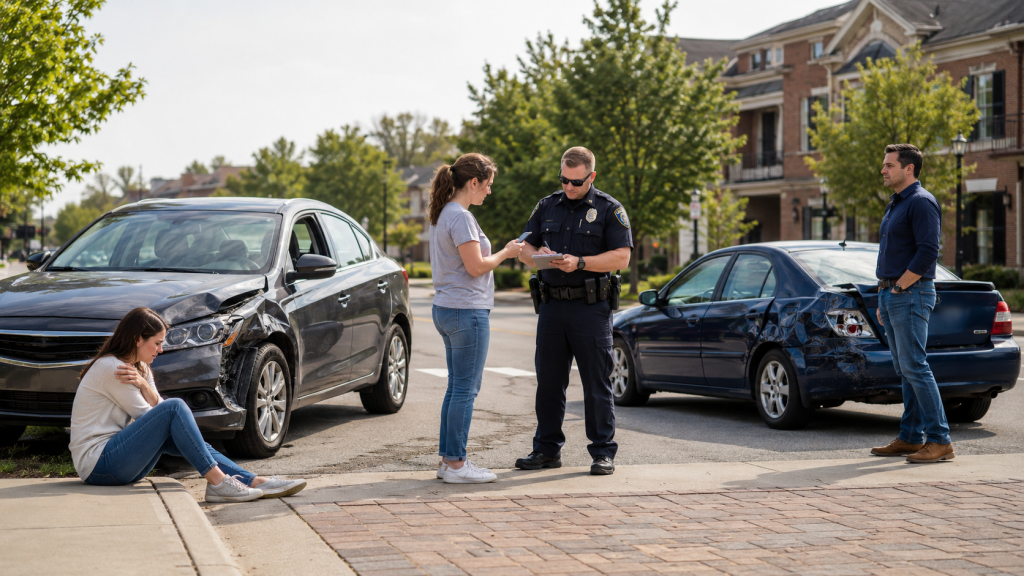
Quick Answer: Yes. A passenger injured in a Carmel car accident may be able to pursue compensation from one or more drivers whose actions caused the crash and through applicable insurance coverage. Because passengers usually are not controlling either vehicle, their claim is often separate from the drivers’ fault dispute, and more than one insurance policy may need to be reviewed when multiple drivers contributed.
How Does a Passenger Injury Claim Work After a Car Accident?
A passenger’s claim depends on who caused the crash. If another driver was responsible, the passenger may have a claim involving that driver’s liability insurance. If the driver of the vehicle carrying the passenger also contributed to the collision, that driver’s insurance may become relevant as well.
A passenger may have a claim involving the driver they were riding with even when that driver is a friend or relative. The relationship between the passenger and driver does not automatically determine whether a claim is available; fault, insurance coverage, and the facts of the collision matter.
Passengers are usually in a different position from the drivers because they were not controlling either vehicle. If both drivers contributed to the crash, the passenger does not necessarily have to choose one side. The claim may involve more than one responsible party or insurance policy.
Which Insurance Coverage and Evidence May Matter?
Different types of insurance can serve different purposes after a passenger is injured. Liability coverage may apply when a driver caused the crash, medical-payments coverage may help with certain medical expenses, and uninsured or underinsured motorist coverage may become relevant when the responsible driver has little or no insurance.
| Coverage Type | How It May Relate to a Passenger |
|---|---|
| Liability coverage | May apply when a driver caused the crash |
| Medical payments coverage | May help pay certain passenger medical expenses |
| UM/UIM coverage | May apply when the responsible driver has no insurance or insufficient insurance |
Indiana insurance guidance generally treats the vehicle owner’s policy as primary in certain passenger-coverage situations, but that does not mean it is always the only policy that matters. Depending on the facts, the policy covering the vehicle, another driver’s liability coverage, or other applicable insurance may need to be reviewed.
Evidence is also important when the drivers disagree about fault. If physically able, a passenger should document the vehicles, damage, roadway, traffic controls, debris, and visible injuries. It can also help to note where the passenger was seated, whether a seat belt was being used, where the impact occurred, and what the passenger remembers seeing or hearing before the collision.
Keep witness information, insurance correspondence, claim numbers, medical records, bills, work restrictions, and documentation of missed work. These records can help establish both how the crash happened and how the injuries affected the passenger afterward.
What Should a Passenger Be Careful About Before Settling?
An insurer may ask a passenger for a recorded statement about the crash and injuries. Give truthful information, but do not guess about speeds, distances, traffic signals, or events you could not clearly see.
Passengers may also receive requests for medical authorizations, records, releases, or settlement documents. Review those requests carefully, especially when several drivers or insurance companies are involved or medical treatment is still ongoing. An early settlement may not account for future treatment, lost income, or other losses that become clearer over time.
If the responsible driver does not have enough insurance, uninsured or underinsured motorist coverage may become relevant. Passenger claims involving more than one driver or insurance policy can require careful review of both fault and coverage.
Anthony “Tony” Oliveira of Dennis, Wenger & Abrell, P.C. handles personal injury matters involving motor vehicle accidents in Indiana.
Frequently Asked Questions About Passenger Injury Claims in Indiana
Yes, potentially. If the driver of the vehicle you were riding in contributed to the crash, the passenger may have a claim involving that driver’s insurance even when the driver is a friend or family member. Whether a claim is available depends on the facts, fault, and applicable coverage.
It depends on the available coverage. Medical-payments coverage may help with certain passenger medical expenses, while liability coverage may become relevant when a driver caused the crash. Other applicable coverage may also need to be reviewed depending on the circumstances.
Document where you were seated, whether you were wearing a seat belt, the point of impact, what you saw or heard before the crash, visible injuries, medical treatment, and any missed work. Those details can help connect the collision to the passenger’s injuries and losses.
Be cautious about settling before you understand the extent of your injuries, expected treatment, lost income, and available insurance. A settlement usually requires a release that can end the claim.
Contact Dennis, Wenger & Abrell, P.C.
If you were injured as a passenger in a Carmel car accident, identifying every responsible driver and applicable insurance policy can matter before you accept a settlement. Contact Dennis, Wenger & Abrell, P.C. to discuss the collision, available coverage, and the circumstances surrounding your injuries.
Legal Disclaimer
This article is for general informational purposes only and is not legal advice. Reading it does not create an attorney-client relationship with Dennis, Wenger & Abrell, P.C. Passenger injury claims depend on the facts, fault, insurance coverage, policy language, and applicable Indiana law. Speak with a qualified Indiana attorney about your situation.