
Quick Answer: To choose a car accident lawyer in Carmel, compare relevant experience, communication, fees, case preparation, and willingness to file a lawsuit if needed. Ask who will handle your claim, how evidence will be collected, what costs may be deducted, and how the firm responds when an insurer disputes fault or injuries. Choose a lawyer who gives clear answers and a realistic plan without guaranteeing a result.
Look for Experience That Fits Your Claim
Car accident cases can involve disputed fault, uninsured drivers, multiple insurance policies, serious injuries, or disagreements about medical treatment. Ask whether the attorney has handled claims involving issues similar to yours. A useful answer should explain how that experience applies rather than simply stating that the firm handles car accidents.
Relevant experience does not guarantee a result, but it may help a lawyer identify evidence, respond to insurance-company arguments, and recognize problems that could affect the claim. Review the firm’s personal injury and wrongful death practice and attorney profiles before scheduling a consultation.
Know Who Will Handle Your Case
The attorney you meet may not be your only contact. Paralegals and other staff members often obtain records, organize documents, and provide routine updates. Ask who will supervise the claim, whom you should contact with questions, and how often you can expect to hear from the firm.
You should also know whether an attorney will speak with you before major decisions, such as making a settlement demand, accepting an offer, or filing a lawsuit. Clear responsibilities and communication expectations can prevent confusion later.
Understand the Fee Agreement
Many car accident lawyers use a contingency fee, which means the attorney receives an agreed portion of the recovery instead of charging the full legal fee when the case begins. Fee terms can vary, so review the written agreement before signing it.
Ask how the fee is calculated, which expenses may be charged, and when deductions are made. Expenses may include medical records, police reports, expert reviews, depositions, and court filing fees. The lawyer should explain these terms in plain language and answer your questions before you make a decision.
Ask How the Firm Will Build Your Claim
A claim may require more than a police report and medical bills. Useful evidence can include crash photographs, video, witness statements, vehicle damage, medical records, employment documents, electronic information, and details about available insurance coverage.
Ask what evidence the firm would seek, who would collect it, and how disputed facts would be addressed. The lawyer should be able to describe a practical process for investigating fault, documenting injuries, calculating losses, negotiating with insurers, and preparing for litigation if a fair settlement cannot be reached.
Consider Useful Carmel and Indiana Knowledge
Local knowledge should have a practical purpose. A lawyer familiar with Carmel may know how to request local crash records, identify possible evidence sources, and arrange convenient in-person meetings. Familiarity with Indiana law and court procedures may also help the attorney explain how the claim could proceed.
Location should not be the only deciding factor. Relevant experience, preparation, communication, and resources remain important. DW&A’s Carmel office page provides more information about the firm’s local presence and personal injury services.
Compare the Answers You Receive
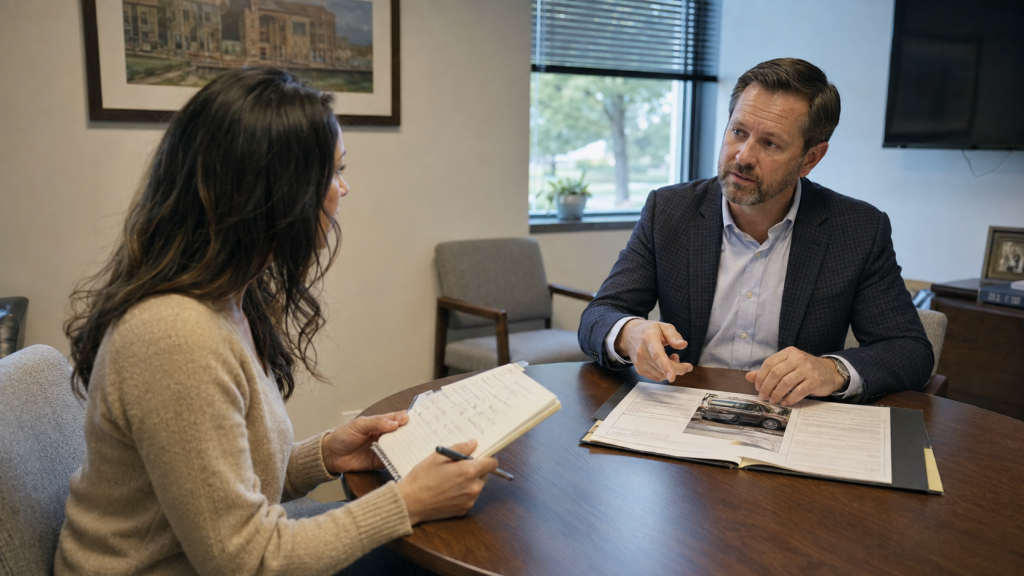
An initial consultation allows the lawyer to review your situation, but it also allows you to evaluate the firm. Bring any crash report, photographs, insurance letters, medical information, and records of missed work that you already have. You do not need to collect every document before requesting a meeting.
| Ask this question | A useful answer should explain |
|---|---|
| Who will handle my claim? | Your supervising attorney and main contact |
| What experience relates to my accident? | How the lawyer has addressed similar issues |
| How will you investigate the crash? | Which evidence the firm may seek |
| How will I receive updates? | How and when the firm communicates |
| How are fees and expenses handled? | What may be deducted from a recovery |
| What if the insurer will not settle? | How the firm evaluates litigation |
Choose the lawyer who listens carefully, identifies the important issues, explains the fee agreement, and presents a realistic plan. The most confident promise is not necessarily the most reliable answer.
Watch for These Warning Signs
Be cautious if a lawyer guarantees a result, predicts a settlement before reviewing the evidence, avoids questions about fees, pressures you to sign immediately, or cannot explain who will handle your claim. A lawyer can discuss possible approaches, but no attorney can know the outcome before the facts, insurance coverage, injuries, and evidence have been reviewed.
Frequently Asked Questions
Not every collision requires an attorney. A consultation may help when someone was injured, fault is disputed, the insurer denies or undervalues the claim, several vehicles were involved, or the accident may cause lasting medical or financial problems.
Speaking with an attorney early may help preserve evidence and prevent avoidable mistakes. This guide explains when to contact a Carmel personal injury attorney after a crash.
Bring the documents you already have, such as the crash report, photographs, insurance correspondence, medical information, bills, and records of missed work. The lawyer can identify any additional information that may be needed.
A Carmel office may make meetings more convenient and provide useful local knowledge, but location should not be the only consideration. Experience, preparation, communication, resources, and your confidence in the attorney also matter.
Ask how the firm decides whether litigation is appropriate and who would handle the case in court. The lawyer should explain how evidence is prepared, what additional costs may arise, and what the client can expect if negotiations do not resolve the claim.