
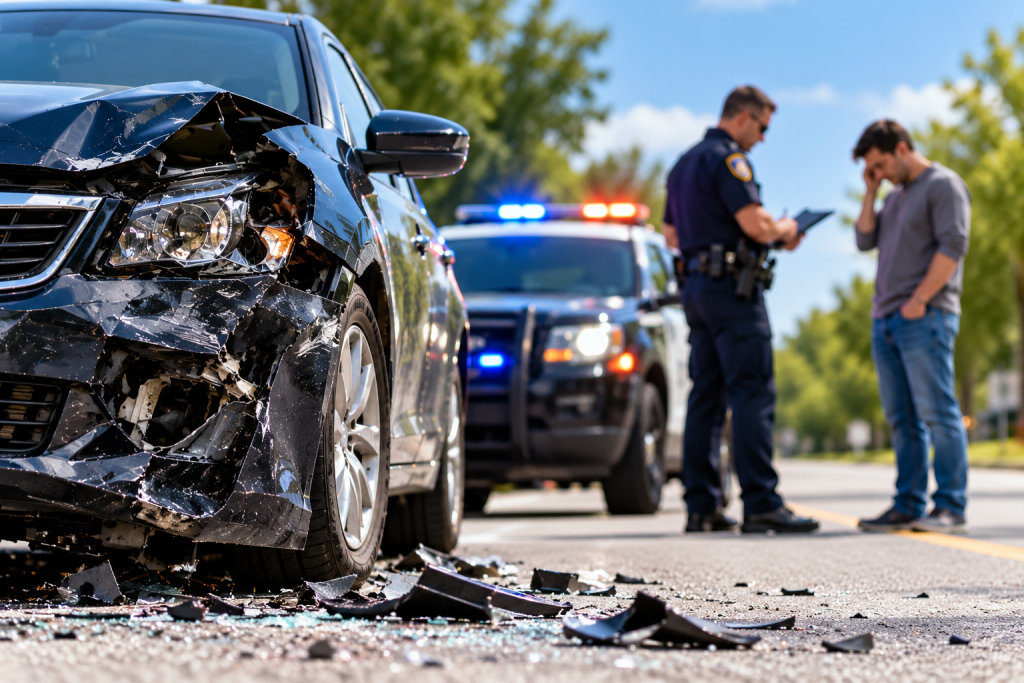
Quick Answer: If a suspected drunk driver causes a crash in Carmel, the driver may face a criminal OWI case and you may also have a separate personal injury claim. Police records, breath or blood test results, witness statements, video, medical records, and other evidence may help show how the crash happened and how you were injured.
How Is a Drunk Driving Accident Different?
A regular car accident claim usually focuses on whether a driver was careless and caused the crash. If alcohol is involved, there may be added evidence showing why the driver was unsafe, including police observations, field sobriety testing, breath or blood test results, witness statements, and video.
In Indiana, impaired-driving cases are commonly handled under OWI laws. The criminal case focuses on whether the driver broke the law. Your personal injury claim is separate and focuses on the injuries, financial losses, and other harm caused by the crash.
If the accident happened in Carmel or elsewhere in Hamilton County, records from the police investigation may become an important part of the injury claim.
What Evidence Matters in a Drunk Driving Accident Claim?
Evidence of alcohol use can be important, but it is only part of the case. You still need evidence showing how the crash happened and how it affected you.
Useful evidence may include police records, breath or blood test results, photos, video, witness statements, vehicle damage, medical records, insurance documents, and records showing missed work.
Medical records can help document your injuries, treatment, and whether future care may be needed. Police records may also contain information about the driver’s condition, testing, or statements made after the crash.
Does a Drunk Driving Charge Automatically Prove the Injury Claim?
No. A drunk driving charge can be important evidence, but it does not automatically prove that the driver caused your injuries.
The evidence still needs to connect the driver’s actions to the crash. For example, it may show that the driver crossed the center line, ran a traffic signal, failed to stop, or made another unsafe move.
The criminal case may help provide evidence, but the civil injury claim still has its own legal requirements.
What Compensation May Be Available?
Depending on the facts, compensation may include medical bills, lost income, property damage, pain and suffering, future treatment, and other accident-related losses.
The value of a claim depends on the seriousness of the injuries, available insurance, evidence of fault, and how the crash affects you over time.
Can Punitive Damages Apply?
Possibly, but they are not automatic just because alcohol was involved.
Punitive damages are different from compensation for medical bills or lost wages. They are meant to address especially serious conduct.
Indiana requires a higher level of proof for punitive damages, so whether they may apply depends on the driver’s conduct and the evidence in the case.
Can a Bar or Restaurant Be Responsible?
In limited situations.
Serving alcohol to someone who later causes a crash does not automatically make a bar, restaurant, or other alcohol provider responsible. In Indiana, these claims generally require evidence that the provider knew the person was visibly intoxicated and that the intoxication contributed to the injury.
That means evidence about where the driver was drinking, what the provider observed, and the driver’s condition may become important.
Do You Have to Wait for the Criminal Case to End?
Usually, no.
A criminal OWI case and a personal injury claim are separate. You generally do not have to wait for the criminal case to finish before speaking with a personal injury attorney about your options.
In some cases, evidence from the criminal investigation may also be useful in the injury claim. That is one reason it can be important to begin reviewing the evidence early.
What Should You Do After a Suspected Drunk Driving Crash?
Get medical care if you are injured and keep any evidence connected to the crash. Save photos, videos, witness information, police records, medical records, insurance documents, repair bills, and proof of missed work.
Do not assume the criminal case will automatically preserve everything needed for your injury claim. Nearby camera footage, witness information, and other evidence may be easier to preserve soon after the crash.
When Should You Contact a Carmel Car Accident Lawyer?
Legal help may be useful if you were injured, the driver is suspected of being impaired, your injuries require ongoing care, insurance coverage is unclear, or you are unsure what evidence may still be available.
A lawyer can review the police investigation, insurance issues, medical records, and other evidence related to the crash. You can also learn more about DW&A’s local services on the firm’s Carmel page.
Frequently Asked Questions
No. An arrest may be important evidence, but you still need to show that the driver’s actions caused the crash and your injuries.
Possibly. The criminal case and personal injury claim are separate, although some evidence may be relevant to both.
Possibly. Punitive damages are not automatic and depend on the driver’s conduct and the evidence available.
In some cases. Indiana law limits when an alcohol provider may be held responsible, so these claims depend on what the provider knew and the facts surrounding the crash.
Usually not. The criminal case and injury claim are separate, so you can speak with an attorney about your options while the criminal case is still pending.
Injured by a Suspected Drunk Driver in Carmel?
If you were injured in a Carmel crash involving a suspected impaired driver, the police investigation, insurance coverage, and other evidence may affect your options.
Dennis, Wenger & Abrell, P.C. handles personal injury and wrongful death matters. If you want to understand what evidence matters and what steps may be available, contact Dennis, Wenger & Abrell, P.C. to discuss your situation.
This article is for general information only and is not legal advice. The law and deadlines that apply depend on the facts of each case.