
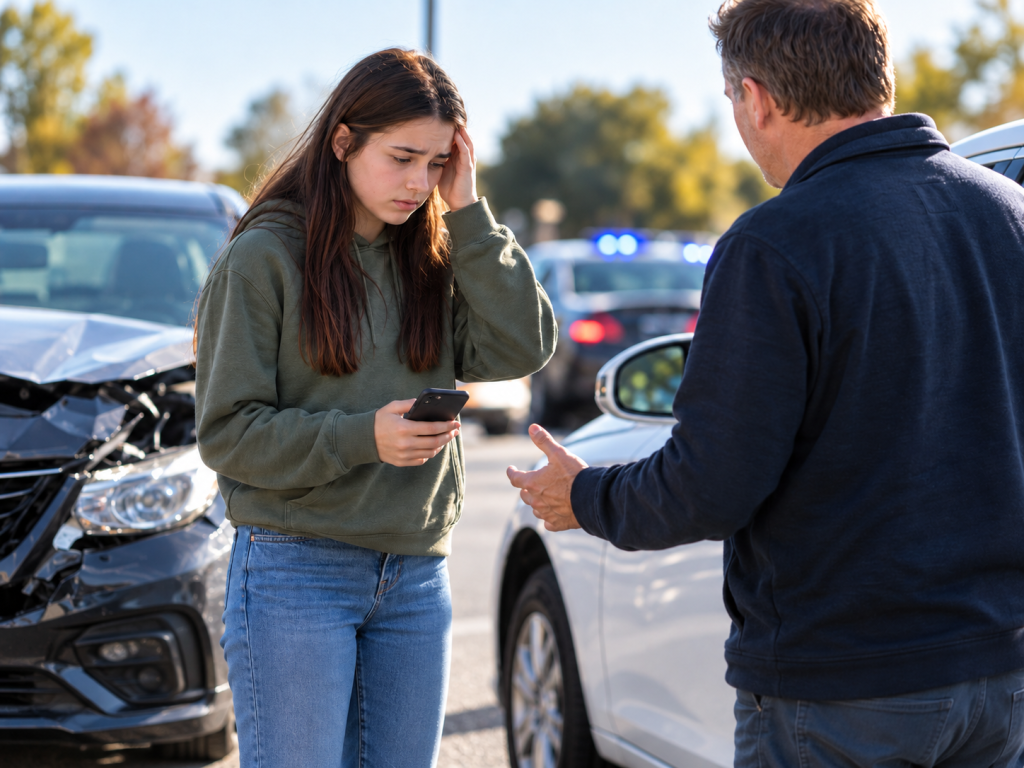
Quick Answer: If a teen driver causes a car accident in Indiana, the teen may be legally responsible for the crash. If the teen is under 18, the adult who signed the teen’s financial responsibility agreement may also be responsible in certain cases. Vehicle ownership and insurance coverage can also affect which policy may pay an injury or property-damage claim.
A teen driver accident in Indiana can raise questions about fault, parental responsibility, vehicle ownership, and insurance coverage. Knowing who was driving is important, but it is only one part of determining who may be responsible after a crash.
Is the Teen Driver Responsible?
A teen driver can be responsible if their actions caused the accident. In a personal injury claim, the issue is often whether the driver acted negligently, meaning they failed to use reasonable care.
Examples may include speeding, distracted driving, following too closely, failing to yield, or running a red light or stop sign. Police reports, photos, witness statements, vehicle damage, medical records, and other evidence can help show how the crash happened.
Can a Parent Be Responsible?
Sometimes, but a parent is not automatically responsible simply because their child caused an accident.
Indiana requires an eligible adult to sign a financial responsibility agreement when a driver under 18 applies for a learner’s permit or driver’s license. According to the Indiana Bureau of Motor Vehicles, the adult who signs the agreement can be jointly responsible with the minor for injury or damage caused by the minor’s driving when the minor is legally responsible for those damages.
That adult is often a parent or guardian, but it may be another qualifying adult. The agreement generally ends when the minor turns 18 or in certain other situations recognized by Indiana law.
Because of this rule, identifying who signed the teen driver’s financial responsibility agreement can be an important part of reviewing a claim.
Does Vehicle Ownership Matter?
Yes, especially when determining which insurance policy may apply.
A teen may be driving a parent’s vehicle, a relative’s car, or a friend’s vehicle. Important questions include who owned and insured the vehicle, whether the teen had permission to drive it, and whether the teen was covered or excluded under the policy.
Vehicle ownership and insurance coverage do not automatically determine who was legally at fault for the crash. They can, however, affect which insurance coverage may be available to pay a claim.
What If the Teen Was Not Listed on the Insurance Policy?
A teen not being listed on the policy does not automatically mean there is no coverage.
An insurance company may review where the teen lived, how often the teen used the vehicle, whether the teen had permission to drive, whether the teen was specifically excluded, and what the policy says about other drivers.
Coverage depends on the actual policy and the facts of the accident, so it is important not to assume that a claim is covered or denied before the policy has been reviewed.
What Insurance Does Indiana Require?
Indiana requires motorists to maintain minimum liability insurance. The Indiana BMV currently lists the minimum limits as $25,000 for bodily injury or death of one person, $50,000 for bodily injury or death of two or more people in one accident, and $25,000 for property damage.
These limits are often called 25/50/25 coverage.
They are minimum amounts only. A serious accident can result in medical bills, lost income, property damage, and other losses that exceed those limits.
What If More Than One Driver Was at Fault?
More than one driver can share responsibility for an accident.
Indiana follows a comparative fault system, which means the amount of responsibility assigned to each person can affect whether damages may be recovered and how much may be recovered. The exact effect depends on the percentage of fault and the parties involved.
For example, a teen driver may have made a mistake, while the other driver may also have been speeding, distracted, or failed to yield. Evidence from the accident can help determine how fault should be divided.
What Should You Do After an Accident With a Teen Driver?
Start with safety and medical care. If possible, collect the teen driver’s information, vehicle owner information, insurance details, photos of the scene and damage, witness contact information, police report details, and records related to medical treatment.
Avoid assuming that only one person or one insurance policy may be involved. The driver’s age, vehicle ownership, insurance coverage, and the facts of the crash may all need to be reviewed.
When Should You Speak With an Attorney?
It may be helpful to speak with an attorney when the accident caused significant injuries, fault is disputed, insurance coverage is unclear, or there are questions about who may be responsible.
An attorney can review the accident, available evidence, vehicle ownership, the teen’s licensing status, and the insurance policies that may apply.
Dennis, Wenger & Abrell, P.C. represents clients in personal injury matters in Indiana. Learn more about the firm’s personal injury and wrongful death practice or visit the Carmel office page.
If you were injured in a crash involving a teen driver, contact Dennis, Wenger & Abrell, P.C. to discuss the insurance and liability issues involved.
Frequently Asked Questions
No. A parent is not automatically responsible simply because they are the teen’s parent. However, the adult who signed a minor driver’s financial responsibility agreement may also be responsible when the teen is liable for the crash.
No. Coverage depends on the policy, who owns the vehicle, whether the teen had permission to drive, and whether the teen was listed or excluded.
The vehicle owner’s insurance may be involved, particularly when the teen had permission to drive. Other available coverage may also need to be reviewed.
Indiana’s minimum insurance limits may not be enough to cover all losses from a serious accident. Other available insurance coverage may need to be investigated.
The financial responsibility agreement for minor drivers generally applies to drivers under 18. If the driver is 18 or older, responsibility is usually evaluated based on the driver’s actions, vehicle ownership, insurance coverage, and the other facts of the crash.
Need Help After a Teen Driver Accident in Indiana?
If you were injured in a crash involving a teen driver, Dennis, Wenger & Abrell, P.C. can help you understand who may be responsible, what insurance coverage may apply, and what options you may have.
Contact Dennis, Wenger & Abrell, P.C. to discuss your case.