
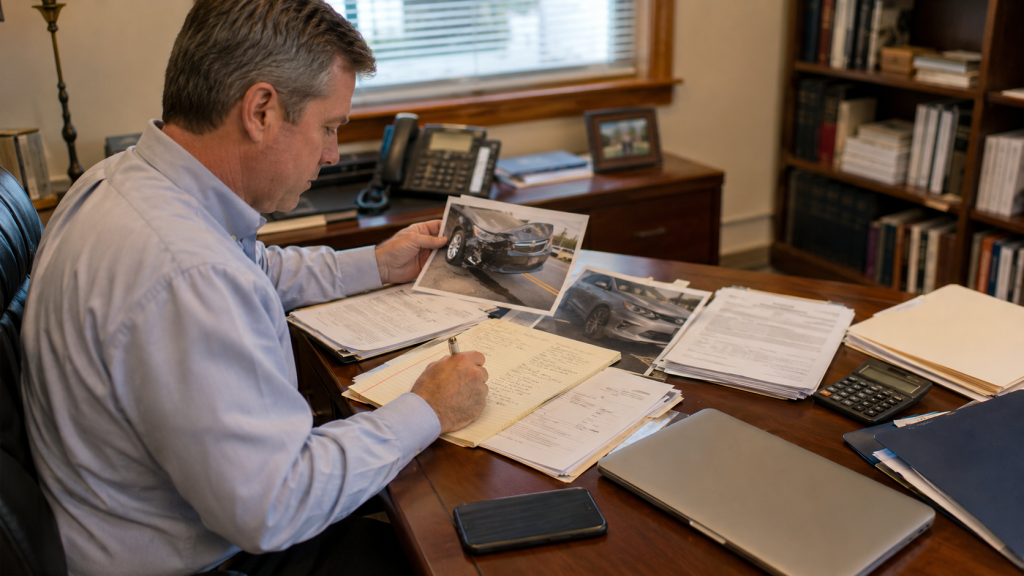
Quick Answer: A car accident lawyer builds and manages your injury claim from beginning to end. The work usually moves from investigating the crash and reviewing insurance coverage to documenting losses, negotiating with insurers, reviewing settlement terms, and preparing a lawsuit when necessary. You remain responsible for major decisions, including whether to accept a settlement.
Investigates the Crash and Preserves Evidence
A lawyer reviews how the crash happened, who may be responsible, and what evidence could prove it. This may include photographs, video, vehicle damage, witness statements, police reports, medical records, and electronic information. For a Carmel accident, the investigation may also involve requesting records from the responding law-enforcement agency or checking whether nearby businesses or cameras captured the collision. Acting quickly can matter because video may be erased, vehicles repaired, and witnesses difficult to locate.
Identifies Responsible Parties and Insurance Coverage
The other driver may not be the only person or company connected to a claim. Depending on the facts, responsibility could involve a vehicle owner, employer, business, manufacturer, or another party. A lawyer examines these relationships and reviews the available liability, uninsured motorist, and underinsured motorist coverage. Identifying all responsible parties and insurance policies can affect how the claim is prepared.
Handles Insurance Communications
Insurance adjusters may request statements, records, medical authorizations, and other information. A lawyer can respond to these requests, provide appropriate documentation, and help the client avoid overbroad or inaccurate responses. If an insurer requests a recorded statement, the attorney can review who is asking, whether the client may be required to cooperate, and how to prepare.
Documents the Effects of the Accident
A claim may include medical expenses, lost income, reduced ability to work, property damage, out-of-pocket costs, pain, physical limitations, and future accident-related needs. A lawyer gathers records to support each claimed loss and prepares an evidence-based calculation. The possible recovery still depends on the facts, available insurance coverage, and strength of the evidence.
Tracks Deadlines and Required Steps
Car accident claims have filing deadlines, notice requirements, and procedural rules that may depend on the type of claim and the parties involved. Missing an applicable deadline or notice requirement can prevent a claim from moving forward. A lawyer identifies the dates that may apply, organizes the required documents, communicates with the correct parties, and files court papers when necessary.
Negotiates and Reviews Settlement Offers
A lawyer presents evidence of fault, injuries, medical care, lost income, and other damages to the insurer. The attorney evaluates settlement offers and explains possible deductions, unresolved medical balances, release terms, and the risks of accepting or rejecting an offer. The lawyer provides advice, but the client makes the final settlement decision.
Prepares a Lawsuit When Necessary
Many car accident claims settle without a trial. A lawsuit may become necessary when an insurer disputes fault, questions the injuries, denies coverage, or refuses to make an acceptable offer. The lawyer can file the complaint, exchange evidence, take depositions, work with experts, file motions, and prepare for trial. Settlement discussions may continue during litigation.
Keeps You Informed and Involved
The lawyer manages the legal work, but the client still provides accurate information, shares documents, attends medical appointments, and makes major decisions. The attorney should explain what has been completed, what information is still needed, which options are available, and what may happen next.
Frequently Asked Questions
The lawyer usually reviews your documents, identifies missing evidence, notifies the appropriate insurers, examines available coverage, and creates a plan for the claim. The next steps depend on the injuries, disputed issues, and available information.
The client makes the final decision. The lawyer explains the offer, expected deductions, release terms, possible risks, and available options before the client accepts or rejects it.
No. Results depend on the evidence, injuries, insurance coverage, disputed issues, and decisions made by the parties or court. Be cautious of anyone who promises a specific outcome before reviewing the facts.
No. Many claims are resolved through insurance negotiations. A lawsuit may be considered when the parties cannot agree about fault, injuries, damages, coverage, or an acceptable settlement amount.
Bring any police report, crash photographs, insurance correspondence, medical information, repair estimates, witness details, and records of missed work that you already have. You do not need every document before requesting a consultation.